
Exeter Strimming Services
Brambles, nettles and bracken brush cutting
Woody, thorny growth taken down with a metal blade: bramble thickets, standing nettle beds, bracken slopes and light scrub that has taken over.
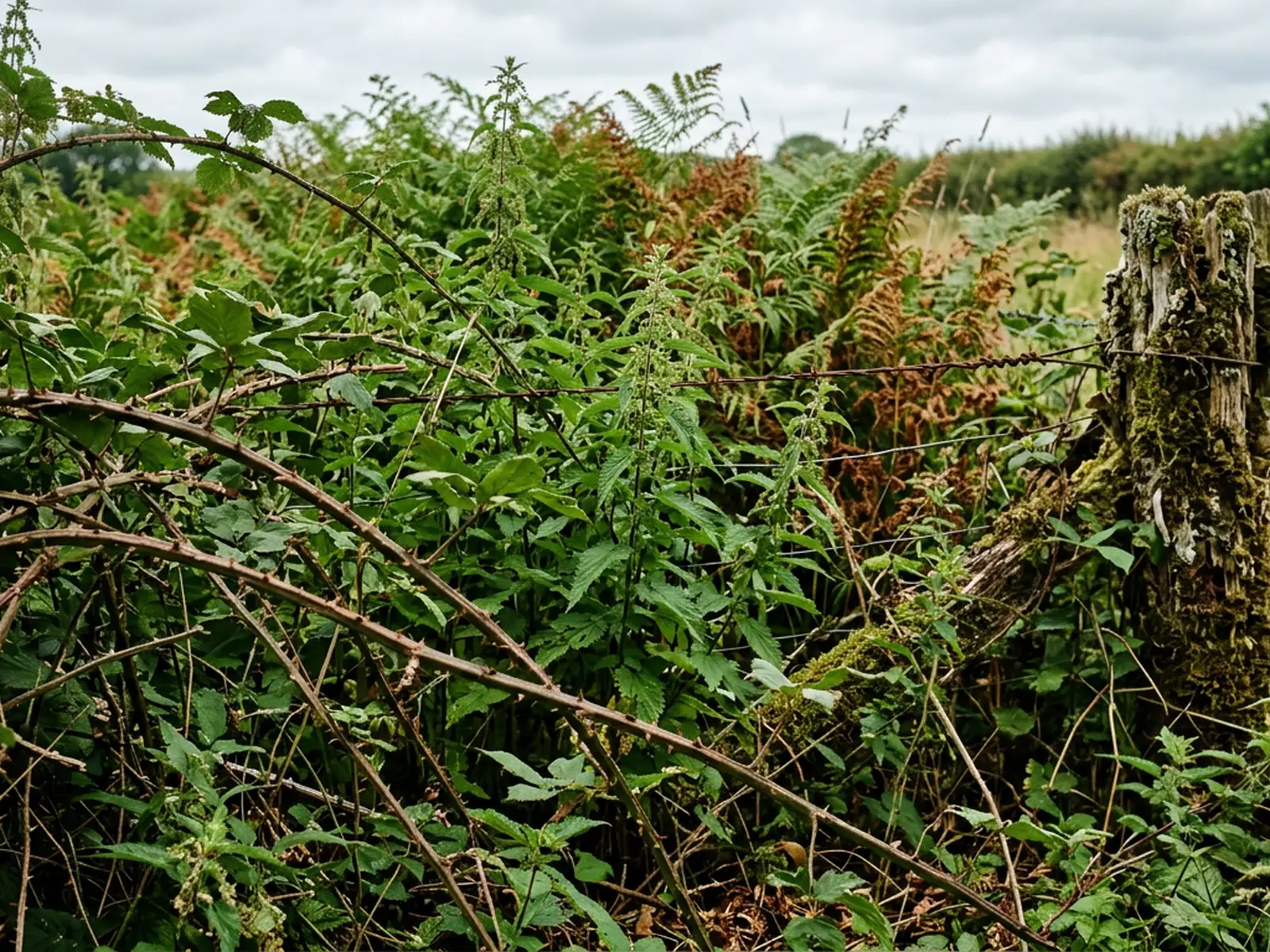
Bramble is a different job to grass and it is worth pricing it in your head as one. A stand of bramble that has been there three or four years has woody stems the thickness of a finger, it is knitted into the fence and the hedge behind it, and every metre cut has to be dragged out before the next one can be reached.
It comes off with a metal brush blade rather than a nylon line, cut low and worked from the outside in so there is always somewhere to pull the material back to. Nettles are quicker but come with their own problem, which is that a bed of them cut in June is back by August unless it is cut again.
Bracken is the Devon speciality. It cuts easily, it grows on the slopes where you least want to be standing, and cutting it twice in a season is what actually weakens it. One cut is a tidy up. Two cuts, one in June and one in late July, is a plan.
What is included
- Cutting woody bramble down to the crown with a metal brush blade
- Dragging and stacking the cut material as the work goes, not at the end
- Nettle beds and docks cut low, with the crowns left exposed
- Bracken cut on slopes, with a second cut later in the season if you want one
- Light scrub, elder and sapling regrowth up to about wrist thickness
- Clearing growth off wire, posts and gates so a fence line can be repaired
Cutting it is not killing it
This is the thing worth knowing before the money is spent. Bramble, nettle and bracken all regrow from what is left in the ground, so a single cut buys you a season and a clear view of the boundary, and next spring it starts again from the crown.
What actually reduces it is repetition. Cutting bramble twice a year for two or three years exhausts the root, and the same is true of bracken cut in June and again in late July when the fronds have opened. Anything faster than that means chemicals, and that is a decision for you and not something this site is going to push.
So the useful question is not whether it will come back. It is whether you want the boundary usable this year, whether you are clearing it to sell or to let, and whether you want it on a repeat visit or you are going to take it on yourself once the hard part is done.
Fence lines and boundaries
A lot of bramble work is really fence work that cannot start yet. Wire and posts disappear under it within two or three seasons, and no fencing contractor can price a repair they cannot see. Cutting the line out and pulling the growth off the wire is usually a couple of hours and it turns an unknown into a measured job.
Where the boundary is shared it is worth a word with the neighbour before the day. Growth gets cut back to the line and the cut material is yours, not theirs, which is the rule most disputes turn on.
What a blade will not do
There is a size beyond which a brush cutter is the wrong tool. Stems thicker than about a wrist, anything that needs to come down from height, and standing trees are chainsaw work rather than brush cutter work, and if that is what you have got you will be told so rather than sold two days of the wrong machine.
Ragwort and Japanese knotweed both come with legal duties about how they are handled and moved. Neither is taken off site here. If either turns up in the growth, the work stops on that patch and you are told what you are looking at.
On the day
How a brambles and bracken runs
- Step 1
Say how old it is
One season of bramble and five seasons of bramble are different jobs. A photograph with something in it for scale, a fence post or a spade, tells more than a measurement.
- Step 2
Decide where it goes
Bramble is bulky and heavy. Taking it away is the biggest single cost on this kind of job, so if there is a corner it can be stacked in, that saves you money.
- Step 3
Estimate and date
An estimate in hours, the next available dates, and a 50% deposit of the estimated time to hold one.
- Step 4
Cut, drag, stack or load
The cutting and the clearing happen together. On heavy bramble the dragging is usually as much of the day as the cutting is.
- Step 5
Agree what happens next
Cut bramble regrows from the crown. You are told plainly what it will do next spring and what would stop it, without being sold a contract.
Behind the work
Kit, cover and registration
Registered waste carrier
Hembury Contracting holds waste carrier registration CBDU641882, so the cut material can leave your property legally rather than being someone else's problem. Tipping is charged on at cost.
Public liability insurance
Cover is in place for the work. Brush cutters throw stones, and anyone taking one near your glass, your car or your neighbour's fence should be able to say what happens if one goes the wrong way.
Petrol brush cutters, not a domestic strimmer
Harness mounted machines with a metal blade for woody bramble and bracken and a nylon head for grass and edges. A hired garden strimmer will bog down in the first hour of anything that has stood for a season.
One rate, published
£60 an hour including VAT, two hour minimum. There is no free site visit to sit through, no per job quote to wait for and nothing to negotiate. What it costs depends on how long it takes.
Brambles and bracken
Brambles, nettles and bracken brush cutting questions
Can you clear a whole bramble bank in a day?
Sometimes. Thirty to sixty square metres an hour is the usual rate on established bramble once dragging is counted, so a full day of eight hours covers a fair sized bank. Send a photograph with something in it for scale and you will get a straight answer.
Will you spray it afterwards?
No. This is cutting work only. If you want a herbicide programme, that is a separate trade and a separate conversation.
When is the best time to cut bracken?
June, once the fronds are fully out, and again in late July if you want to actually set it back rather than just tidy it. Cutting it in spring before it has spent its energy achieves the least.
Where
Brambles, nettles and bracken brush cutting across the South West
See the hourly rate
Book a clearance with Exeter Strimming Services
Send a postcode, a rough size and a couple of photographs. Sam Hembury will come back with an estimate in hours and the next dates available.