
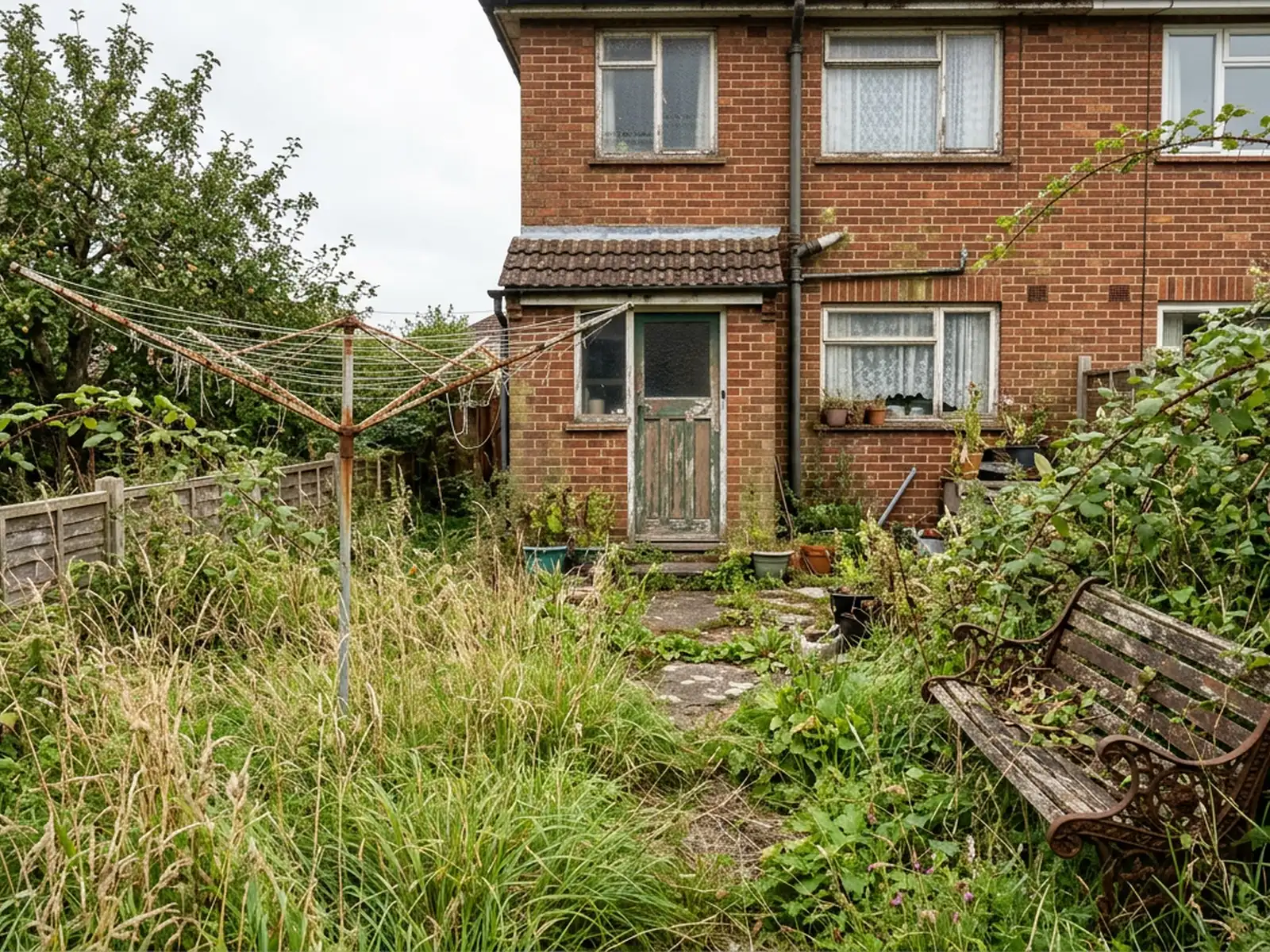
Overgrown garden strimming and clearance
A garden that has stood for a season or several, cut down to ground level in one visit and raked off so you can see what you have got.
Overgrown gardens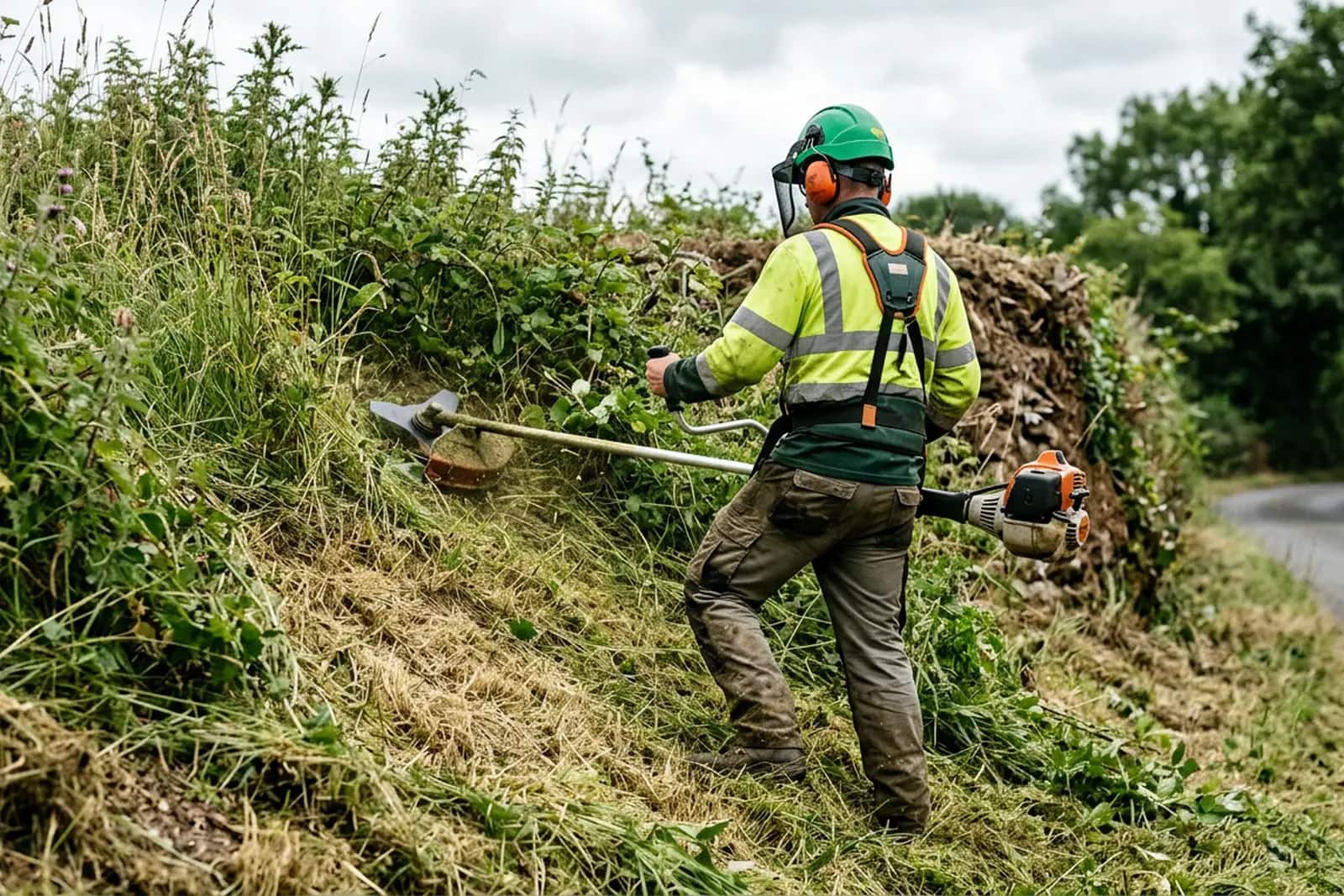
Exeter and 20 miles around
Gardens gone over, banks and verges, brambles and nettles, paddock edges, hedge bases and fence lines. Proper petrol brush cutters, all the cuttings cleared, and a price you can work out before you ring.
£60 an hour
Including VAT. Two hour minimum, so £120 is the smallest job. Half a day is £240 and a full day £480.
See the hourly rateThe cut
Drag the handle across, or focus it and use the arrow keys.


The state of it
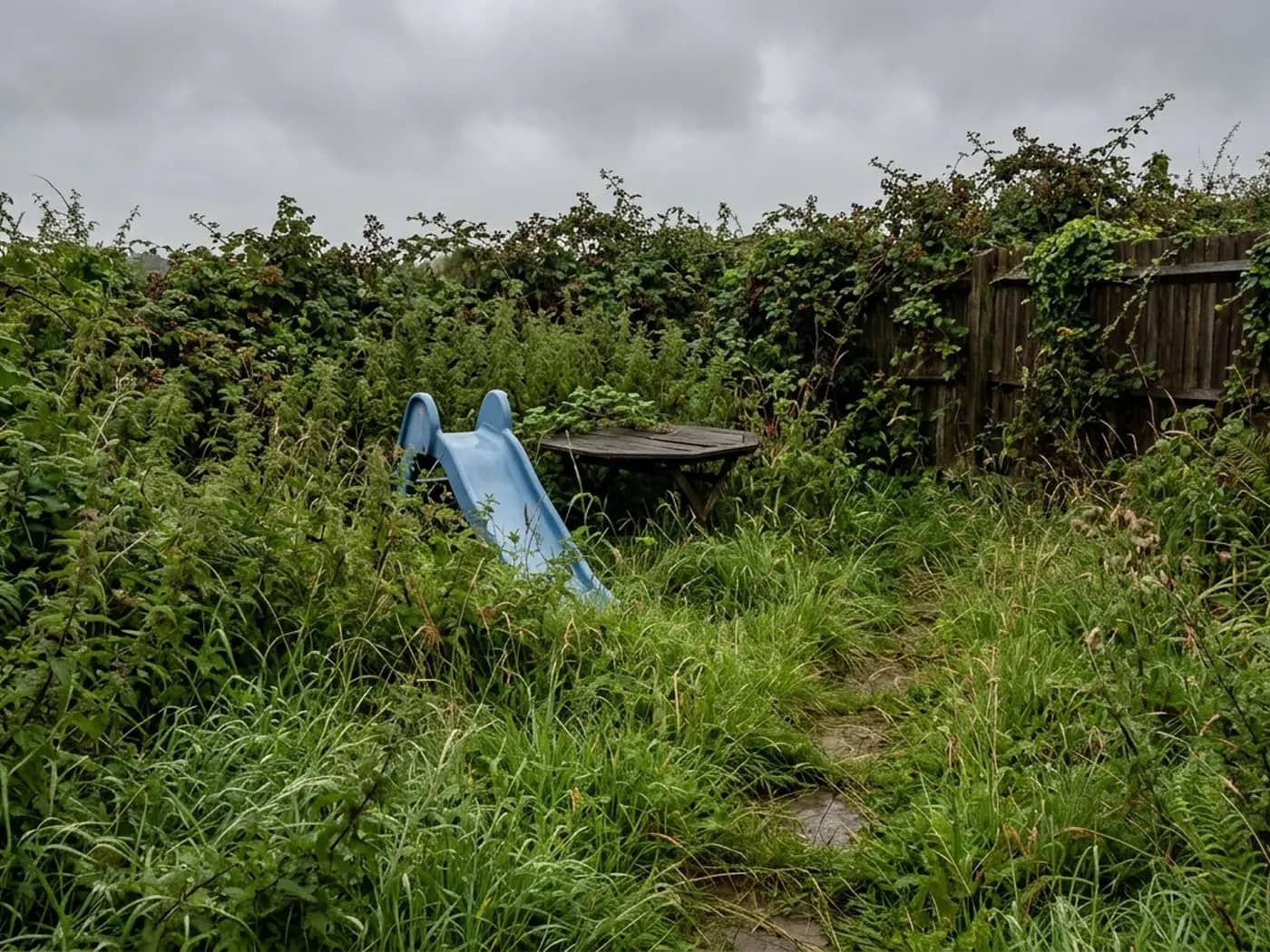
Grass gets away first, then the nettles come through it, and by August there is bramble arching over the fence and you cannot see where the path used to be. It happens to people who have been ill, people who have been away, landlords between tenants, executors clearing a house, and anyone who simply lost a summer to something more important.
The problem is rarely that nobody wants to deal with it. It is that a domestic strimmer will not touch it, the local gardener wants a weekly contract rather than a one off, and every firm you ring wants to come and look at it first and then post you a price a week later.
This site does it the other way round. There is one published rate, the machines are the ones that will actually get through it, and the cut material is taken away in the same visit. You send a couple of photographs and you get told roughly how many hours it will take.
What gets cut
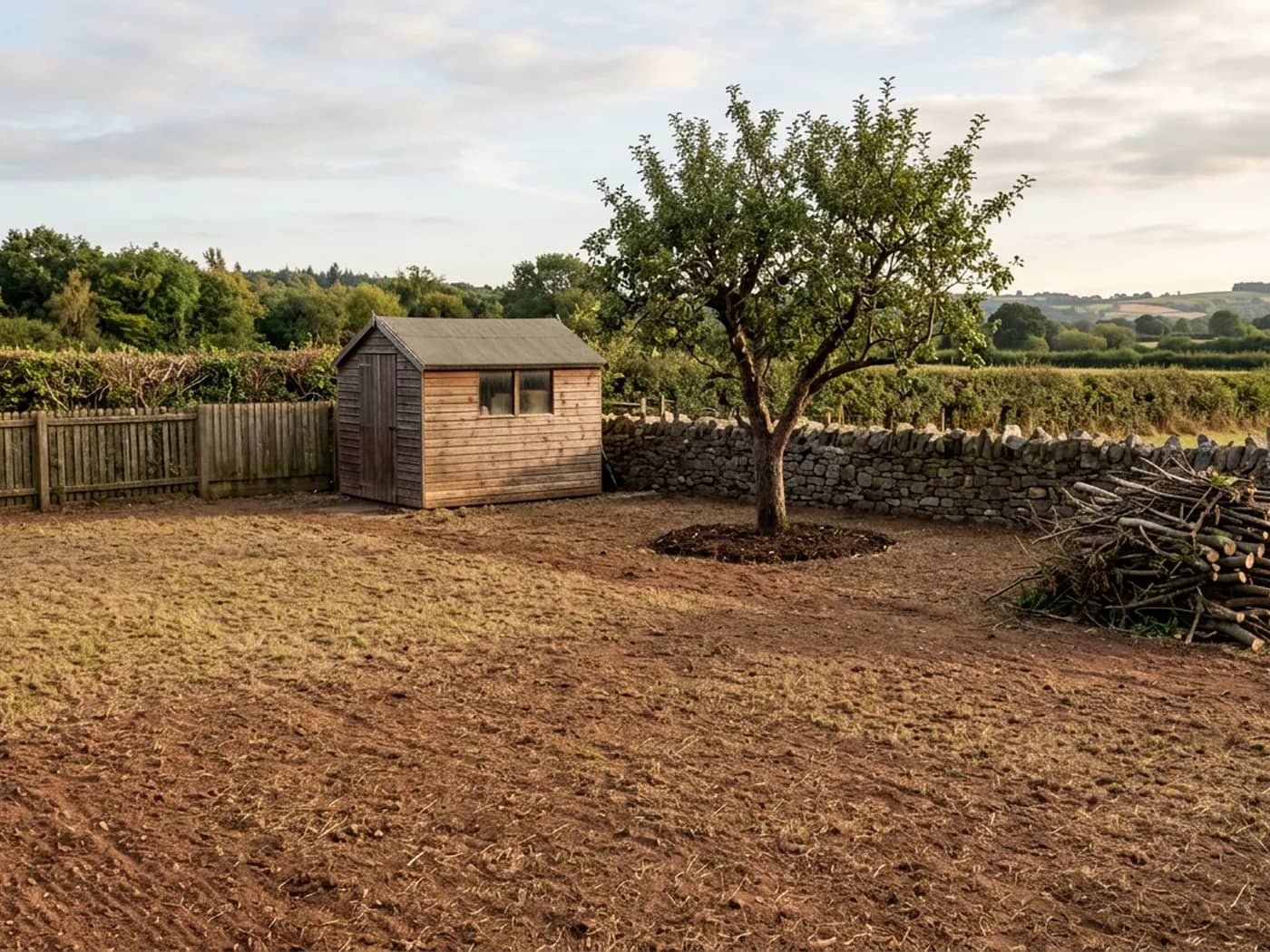
A garden that has stood for a season or several, cut down to ground level in one visit and raked off so you can see what you have got.
Overgrown gardens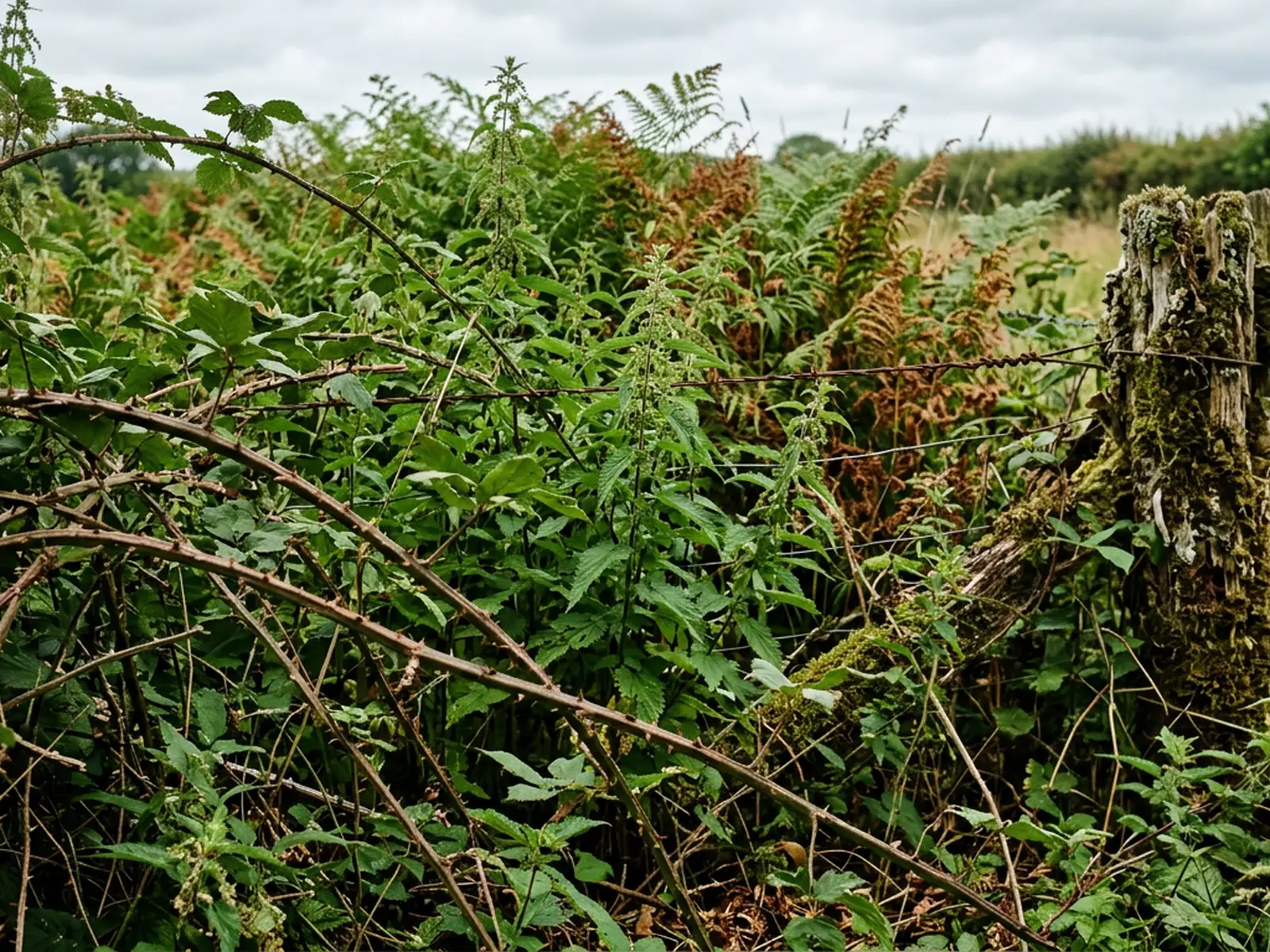
Woody, thorny growth taken down with a metal blade: bramble thickets, standing nettle beds, bracken slopes and light scrub that has taken over.
Brambles and bracken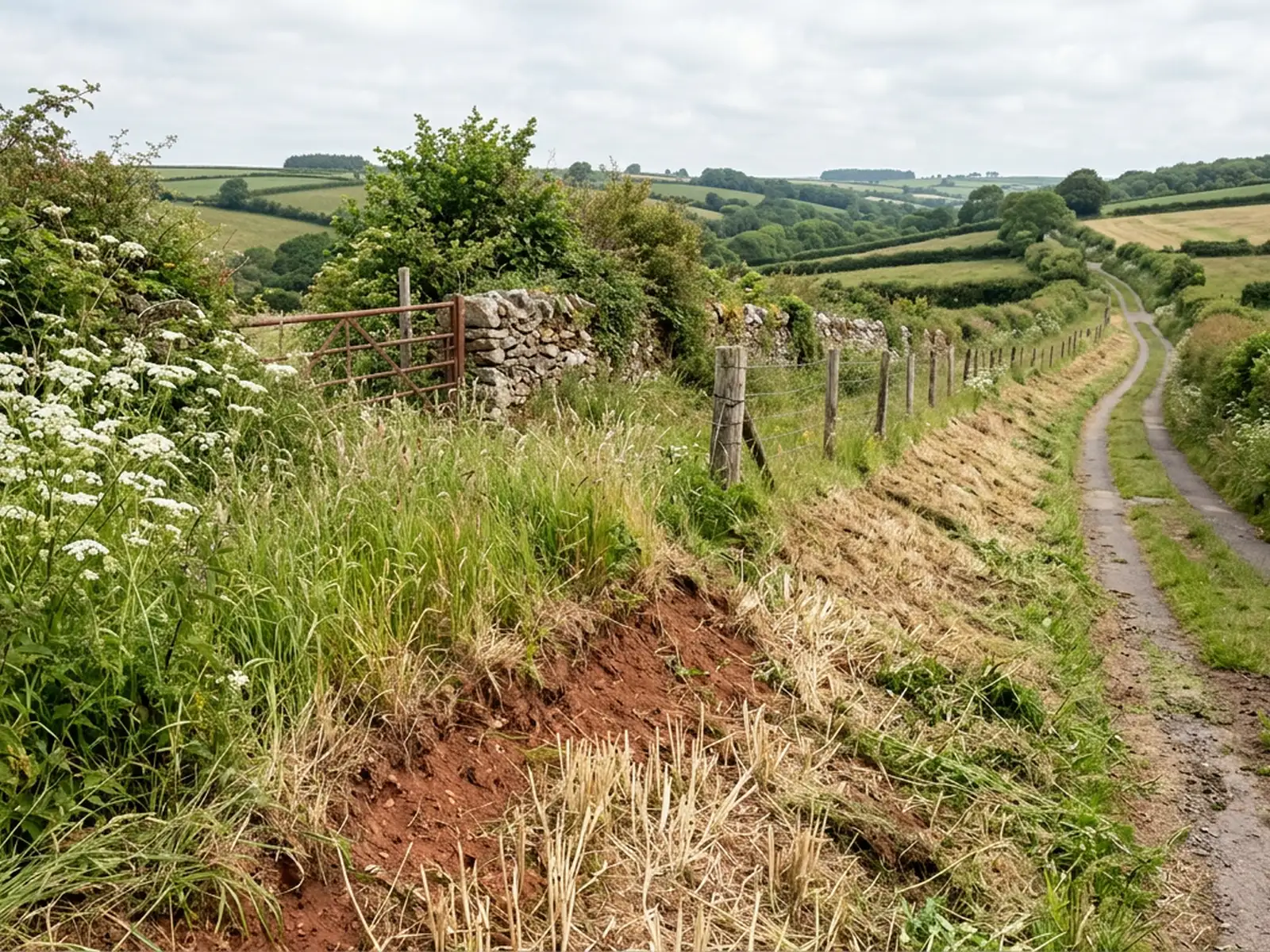
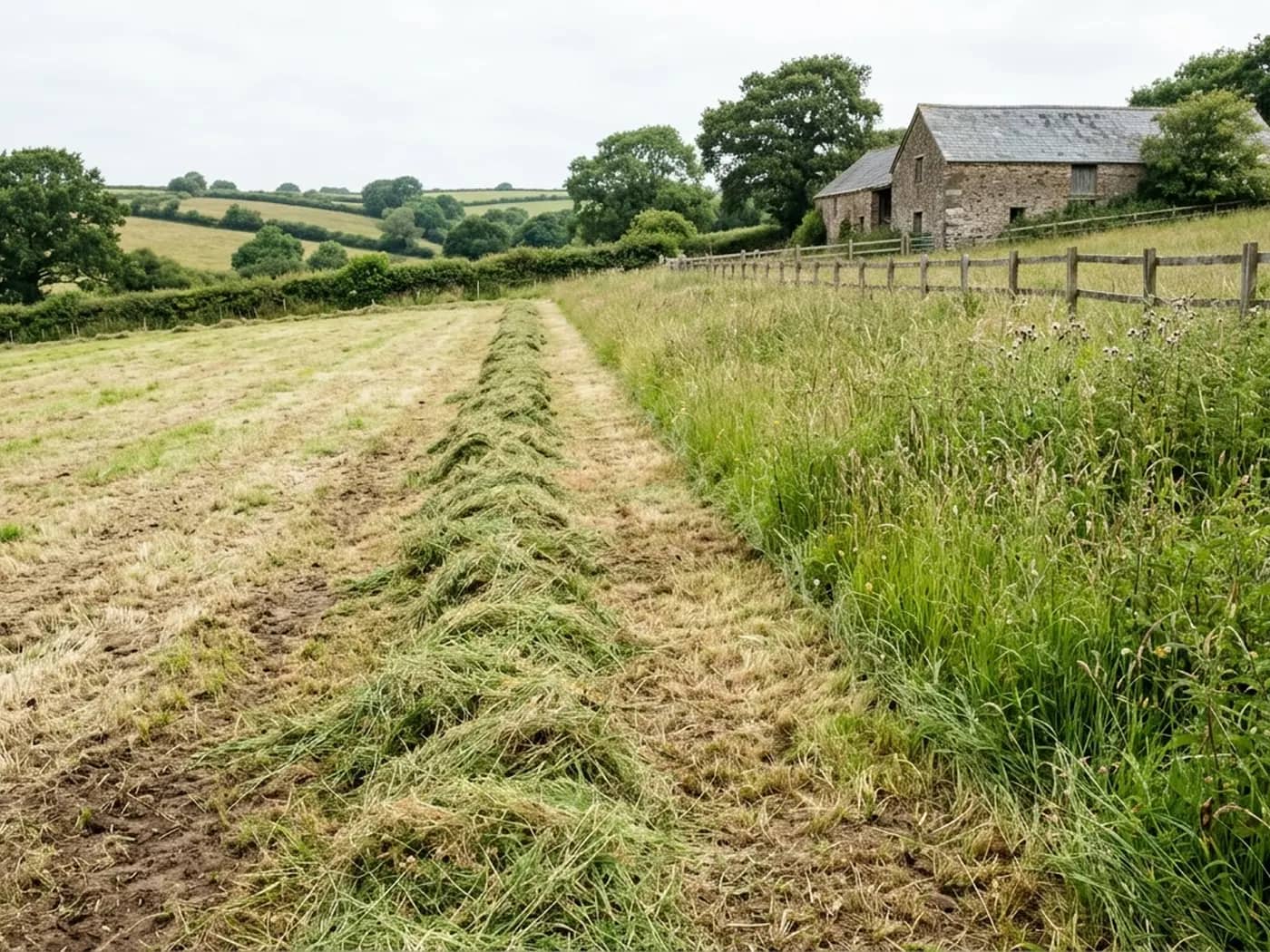
The ground a mower cannot get to: steep hedgebanks, roadside verges, paddock and field margins, hedge bases, fence lines and the awkward strip round the edge.
Banks and paddocksCredentials
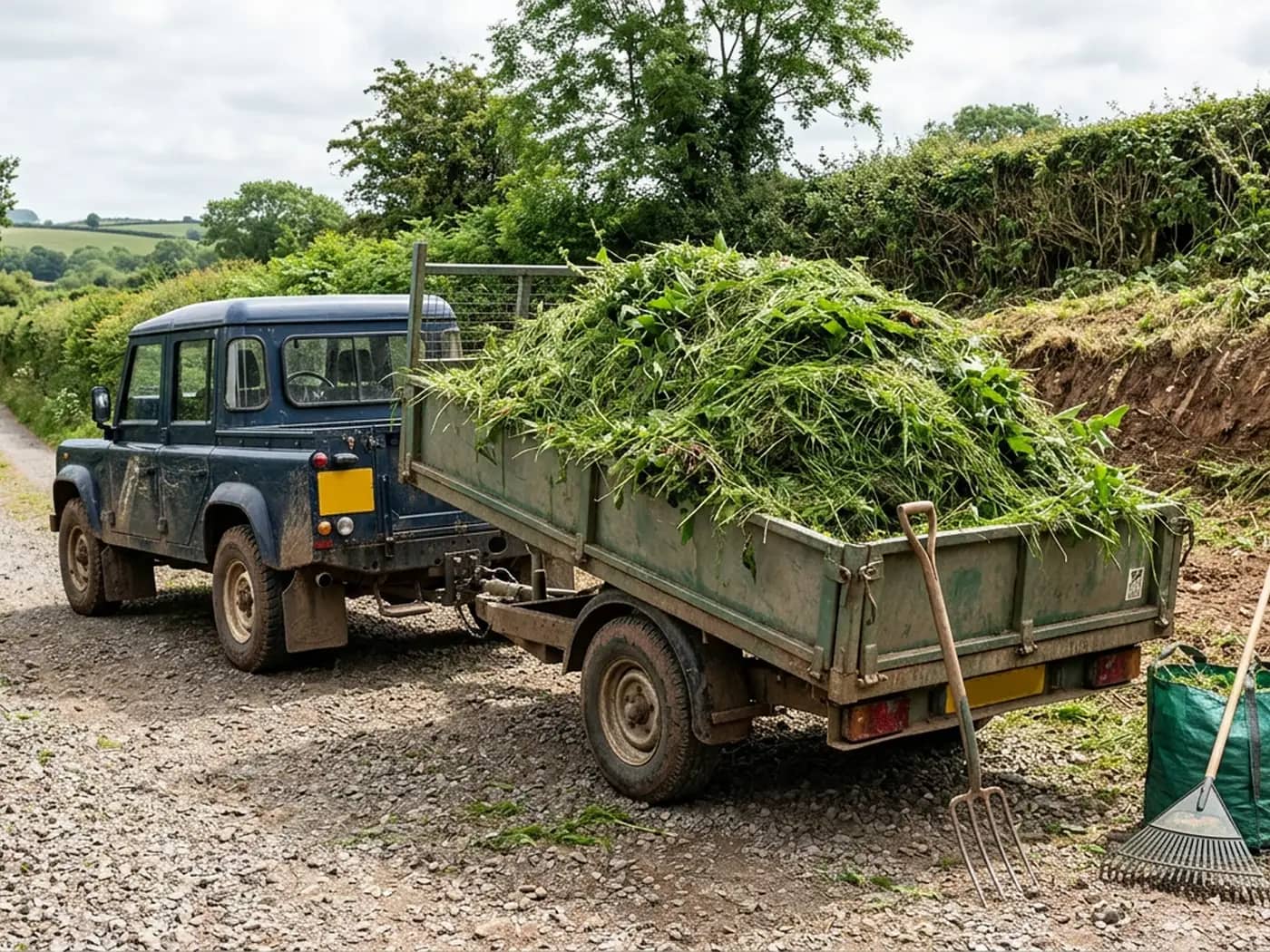
Hembury Contracting holds waste carrier registration CBDU641882, so the cut material can leave your property legally rather than being someone else's problem. Tipping is charged on at cost.
Cover is in place for the work. Brush cutters throw stones, and anyone taking one near your glass, your car or your neighbour's fence should be able to say what happens if one goes the wrong way.
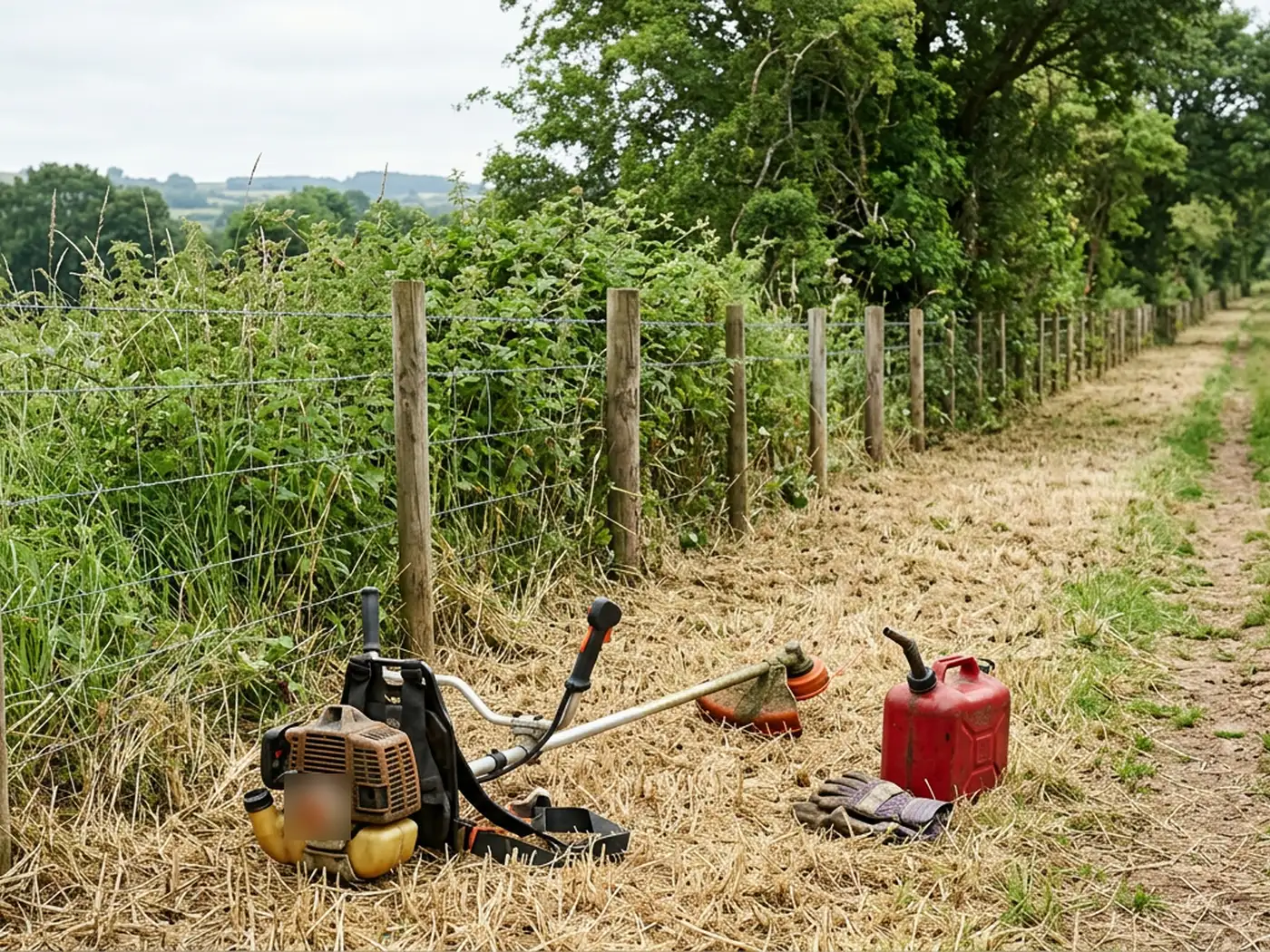
Harness mounted machines with a metal blade for woody bramble and bracken and a nylon head for grass and edges. A hired garden strimmer will bog down in the first hour of anything that has stood for a season.
£60 an hour including VAT, two hour minimum. There is no free site visit to sit through, no per job quote to wait for and nothing to negotiate. What it costs depends on how long it takes.
What an hour buys
Before, during, after
Where we work
Questions
£60 an hour including VAT, with a two hour minimum, so the smallest job on the book is £120. Half a day of four hours is £240 and a full day of eight hours is £480. A second person, where the job needs two, is £30 an hour on top.
Because nobody can tell what is under a season of growth until it comes off. A fixed price for clearance is either padded to cover the worst case or gets revised on the day, and both of those cost you more than an hourly rate does. You are told roughly how long it should take, and you pay for the time it actually takes.
Not as a rule. Photographs and a rough size are enough to estimate the hours, and a site visit adds a trip to the cost of a job that has a published rate anyway. If the access is unusual or you want someone to stand in it with you first, say so and it can be arranged.
Your choice. It can be raked up and taken away under the waste carrier registration, with the tipping charged on at cost. It can be stacked in a corner to rot down, spread as a mulch, or left in windrows where it fell if you are happy to deal with it yourself, which is the cheapest option because it is quicker.
Send photographs, the postcode and a rough idea of the size. Back comes an estimate of the hours and the next dates that work. A 50% deposit of the estimated time holds the date and the balance is due when the work is finished.
Exeter and roughly twenty miles around it, which takes in the estuary and the coast down to Teignmouth, east to Honiton and Sidmouth, north to Tiverton and Cullompton, and west to Okehampton and the edge of the moor.
Tree work needing a chainsaw at height, anything requiring a licence to move ragwort or Japanese knotweed off site, and ground you cannot reach without going through a house. Say what you have got and you will be told straight away if it is not a job for a brush cutter.
It depends on the week and on the weather, since cutting sodden growth takes longer and makes a worse job of it. Ask for the next available dates rather than a promised turnaround, because a turnaround printed on a website is a number nobody can hold anyone to.
See the hourly rate
Send a postcode, a rough size and a couple of photographs. Sam Hembury will come back with an estimate in hours and the next dates available.