
Devon · EX2
Strimming and overgrowth clearance in Ide
Overgrowth clearance in Ide, a conservation village in a valley west of Exeter, where cottage gardens, old orchards and thatch all change how a job is worked.
Cottage gardens and old orchard ground
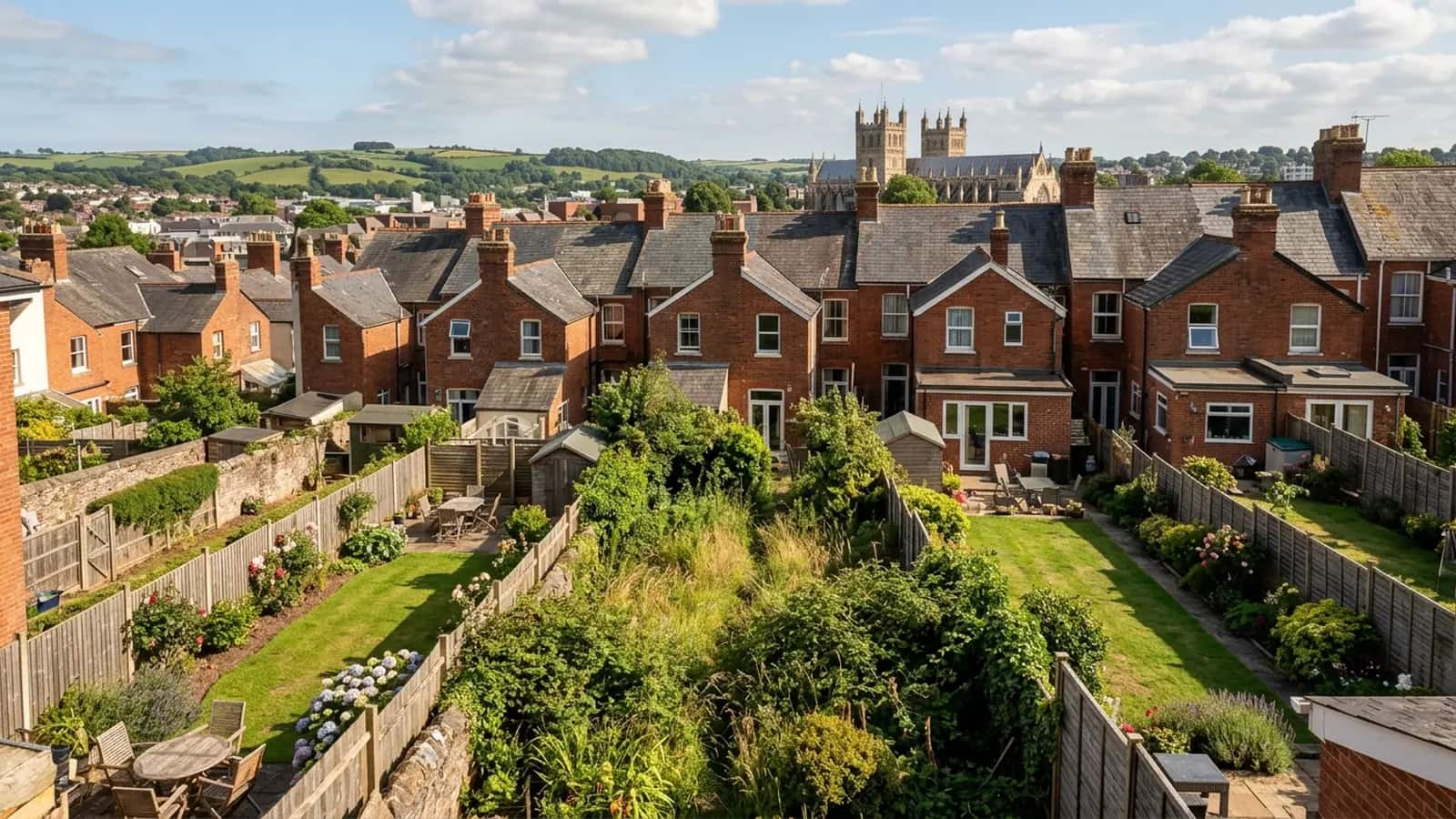
Ide has kept its shape as a village, and the gardens behind the cottages along the street are old ground: fruit trees, established hedges, stone edging and paths that have been where they are for a very long time. Ground like that hides more than a new estate plot does.
Old orchard grass is a common job here. It stands high by midsummer, it is often wet underneath from the shade, and it wraps a nylon head quickly, so it is cut in two passes with the second one low. Working around trunks and low branches by hand is part of the time and is worth allowing for.
Working near thatch and cob
A significant number of the older cottages here are thatched, and a brush cutter throws stones and grit a long way. That changes how the work is done rather than whether it can be done: the nylon head goes on near a wall or a low eave, the blade stays for open ground, and anything within throwing distance of glass gets cut facing away from it.
Cob walls and old stone boundaries take the same care. They shed material if a blade catches them, and the cost of being casual about it is far higher than the ten minutes it saves.
The valley bottom stays damp
The village sits in a valley below the Alphington and Exwick ridges, sheltered from the wind and slower to dry than the open ground above it. Growth here starts early and keeps going, and the shaded corners hold moisture right through the summer.
Shade also brings a particular set of problems: ivy running out of a hedge across the ground, laurel spreading where nobody planted it, and bramble taking the north side of a boundary before anybody notices it.
The village street and where to park
The street through Ide is narrow and parked, and a pickup with a trailer cannot simply sit on it for four hours. Where a drive, a yard or a gateway can be used for the day it saves the whole job time, and it is the first thing worth sorting out when booking.
St Ida's Church and the conservation area boundary are the usual landmarks people use, and either is enough alongside an EX2 postcode to place a job for an estimate.
The lanes out of the village
Beyond the conservation area the lanes climb quickly and the properties on them have paddocks, orchards and long hedgebank boundaries rather than gardens. That is day work rather than hour work, and it is the same ground as the smallholdings above Alphington and St Thomas.
Hedgebank faces on these lanes close in fast because they are sheltered on both sides. Frontage is cut back to the boundary line, which usually restores a good deal more width to the lane than people expect.
Where a lane property has both a garden and a paddock, both usually get done in the same visit, because the machine, the fuel and the trailer are already there and splitting it across two days costs more than it saves.
Behind the rate
What you are paying for in Ide
Registered waste carrier
Hembury Contracting holds waste carrier registration CBDU641882, so the cut material can leave your property legally rather than being someone else's problem. Tipping is charged on at cost.
Public liability insurance
Cover is in place for the work. Brush cutters throw stones, and anyone taking one near your glass, your car or your neighbour's fence should be able to say what happens if one goes the wrong way.
Petrol brush cutters, not a domestic strimmer
Harness mounted machines with a metal blade for woody bramble and bracken and a nylon head for grass and edges. A hired garden strimmer will bog down in the first hour of anything that has stood for a season.
One rate, published
£60 an hour including VAT, two hour minimum. There is no free site visit to sit through, no per job quote to wait for and nothing to negotiate. What it costs depends on how long it takes.
Nearby
Also covered around Ide
- ExeterStrimming and overgrowth clearance across Exeter, from long Victorian back gardens to new estate plots, where access usually costs more time than the cutting.
- St ThomasStrimming and clearance in St Thomas, where the flood plain soil west of the Exe grows harder and heavier than the drier ground on the hills either side.
- AlphingtonOvergrowth clearance in Alphington, where an old village core and the estates around it sit on the flat, damp ground of the Alphin Brook beside Marsh Barton.
- ChudleighStrimming and clearance in Chudleigh, where steep wooded combes and permanently shaded ground let ivy, laurel and bramble get away faster than in open country.
See the hourly rate
Book a clearance in Ide
Send a EX2 postcode, a rough size and a couple of photographs. Sam Hembury will come back with an estimate in hours and the next dates that suit the weather.